Forgive me, dear reader, for my silence: the machinations of back to school have so far consumed me, and now that we have our first ‘real’ week back under our belts, I feel as though I am coming up for air and able to write again.
Saturday mornings I have a bit of a routine: up until last year, it was a steadfast and regular love of Stuart McLean and the Vinyl Cafe as I puttered around the house. Sadly now, there are no dulcet tones of Dave and Morley, only the more contemporary “This is my Music/Playlist/Du Jour” from our national broadcaster.
Part of that routine is walking the dog. Part of it is usually entails baking something toothsome for the boys, and lately, part of that routine is throwing myself an odd ingredient and seeing what I can make of it. Today I decided to tackle chickpea flour.
When I re-vamped the pantry for A and rendered it totally gluten-free, one of the items I noticed consistently in a lot of baked good recipes was chickpea flour. It secured a permanent spot in my sometimes alchemical pantry. But I didn’t use it. Until now.
I wanted to throw together a morning muffin, and am ever conscious of introducing more fibre into the diet. After all, it’s all about regularity, and after our journey, it has definitely been a year of becoming intimately acquainted with all of our insides.
Chickpea flour is high in protein, great on fibre, and as part of the legume or pulse family, extolls a variety of health benefits. And according to Epicurious:
Though just recently gaining popularity as a pantry staple in the States, chickpea flour—also known as gram flour, garbanzo bean flour, or besan—has been used in parts of Asia and Europe for centuries. Perhaps the best known uses come from Italy and France where it’s fried and roasted into a variety of snacks and breads. In Southern France chickpea flour is cooked like polenta, cooled, sliced into logs, then fried for the addictive snack known as panisse. In Italy, they do the same thing and call it panelle. The other way it’s commonly made is as a big (traditionally wood-oven-roasted) unleavened pancake known as farinata in Italy and socca in France, where it’s often cut into wedges and served alongside salad or as a snack all on its own.
Who knew!?
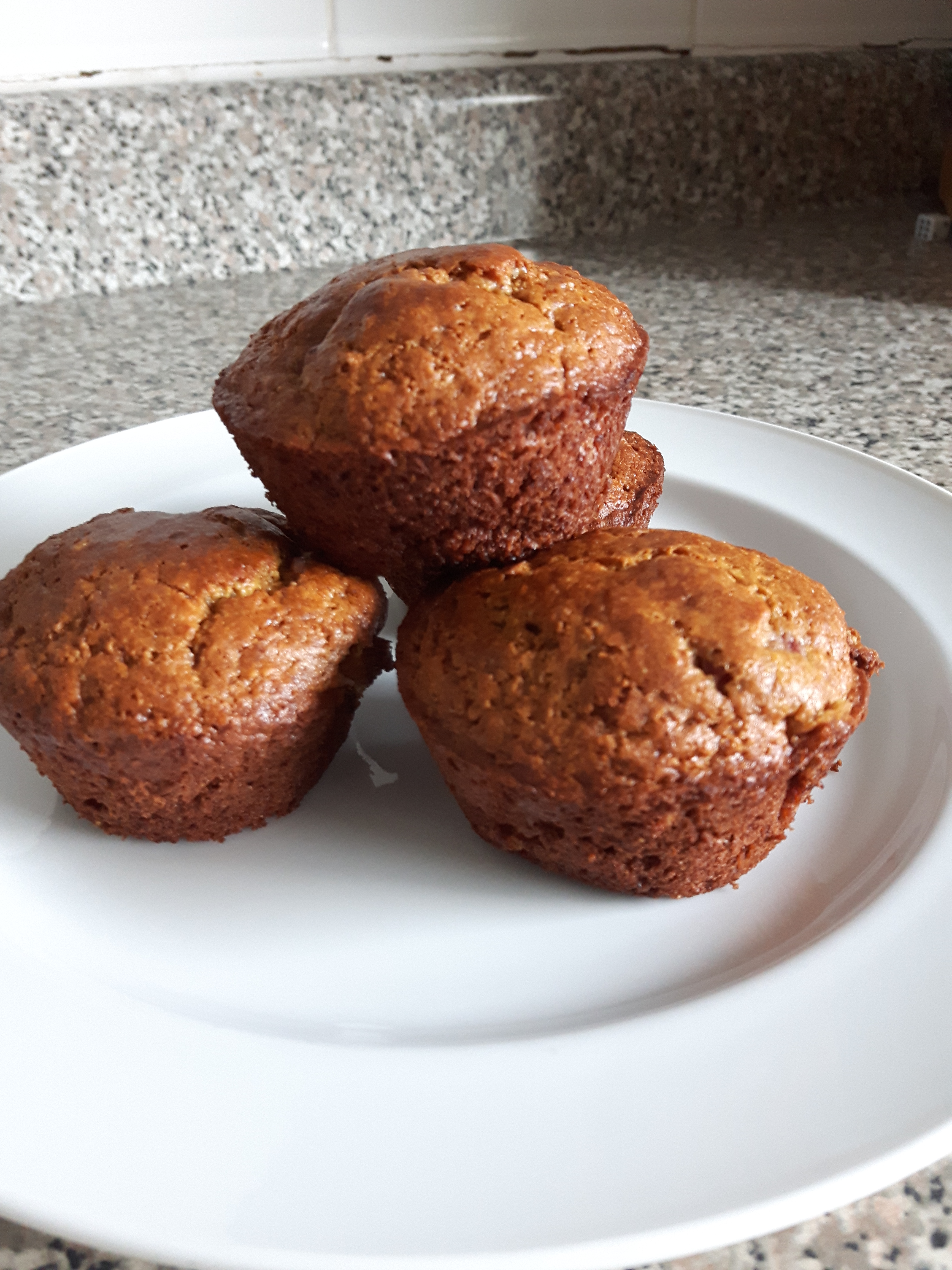
I started slowly, with baby steps and a simple morning muffin: combining egg, oil, milk sugar, chickpea flour, baking soda/powder, the zest of a lemon and a 1/2 cup of strawberries.
We discovered that chickpea flour is delicious, and lends a density to baked goods that is often missing in GF baking. The texture of the muffin was virtually interchangeable to a standard wheat flour variety. Amazing!
I look forward to further experimentation!!!
 Another Gluten Free Foodie